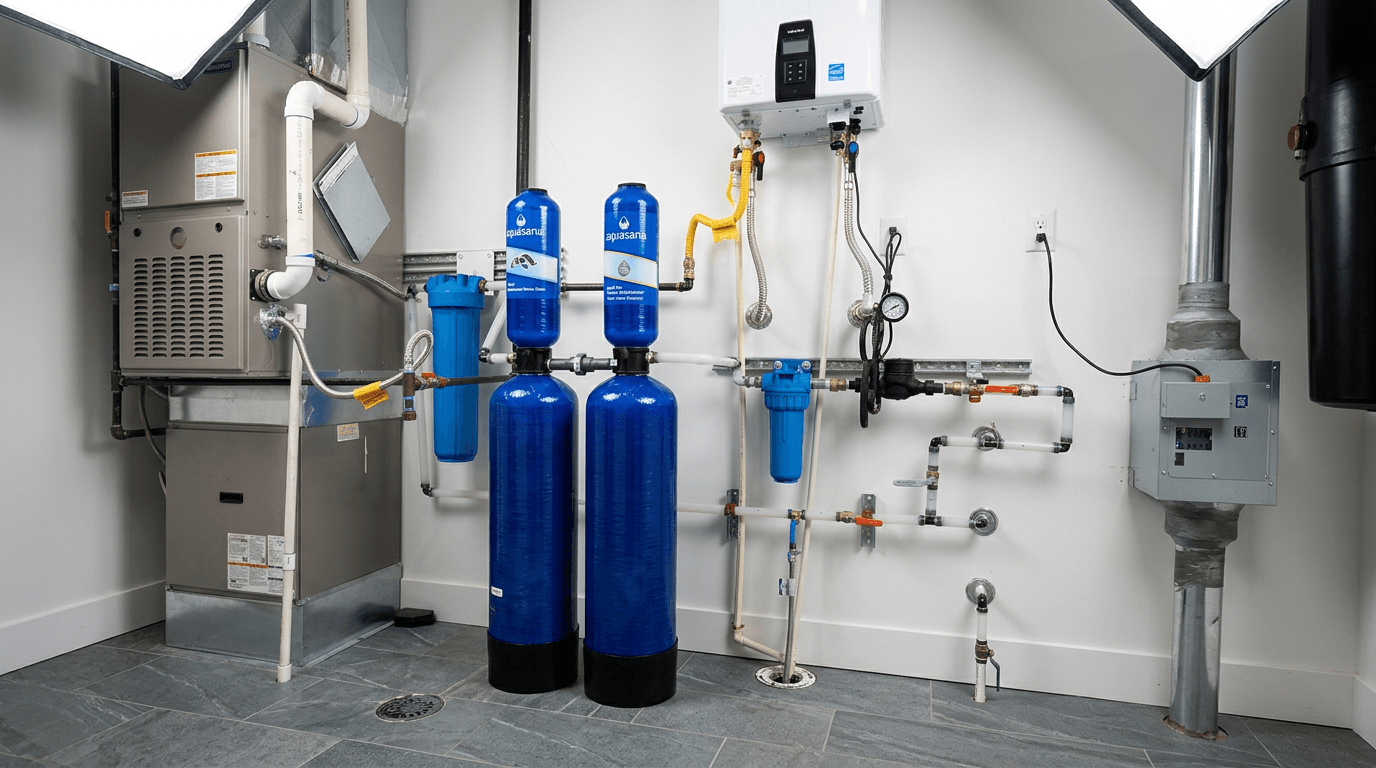
There is no single "best" water filter — only the best filter for *your* water. A filter that's excellent at improving taste may do nothing for lead, and a system that removes PFAS may be overkill if your only issue is chlorine. The process is simple: find out what's in your water, then match the technology and certification to it.
Step 1: know your contaminant
Start with your water report, your utility's annual report, and — for lead or PFAS — a certified test. Buying a filter before you know your contaminant is guessing.
Step 2: match the technology
- Activated carbon (most pitchers, faucet, fridge filters): great for chlorine, taste, odor, some VOCs, and — if certified — lead. Limited against dissolved salts and nitrate.
- Reverse osmosis (RO): the broadest reduction — lead, PFAS, arsenic, nitrate, and more — at the cost of slower flow and some water waste. Usually installed under the sink.
- Ion exchange / water softeners: target hardness (calcium, magnesium) and some metals; softeners don't make water "safe," just softer.
- Distillation and UV: distillation removes most contaminants; UV disinfects microbes but doesn't remove chemicals.
Step 3: insist on NSF/ANSI certification
A filter's marketing claims mean little without independent certification. NSF/ANSI standards (certified by NSF and others) tell you exactly what a product is proven to reduce:
- NSF/ANSI 42 — aesthetic effects: chlorine, taste, and odor.
- NSF/ANSI 53 — health effects: lead, certain VOCs, cysts like Cryptosporidium.
- NSF/ANSI 58 — reverse osmosis systems (covers contaminants like arsenic, nitrate).
- NSF/ANSI 401 — "emerging" contaminants such as some pharmaceuticals.
- NSF/ANSI 53 or 58 for PFOA/PFOS — the certifications to look for to reduce PFAS.
Step 4: match certification to your contaminant
This is the step most people skip. If your concern is lead, a filter certified only to NSF/ANSI 42 (taste) won't help — you need 53. For PFAS, look specifically for PFOA/PFOS reduction. Always confirm the certification covers *your* contaminant, not just "water filtration" in general.
The bottom line
Test first, then buy a filter independently certified to reduce the specific contaminant you have — and maintain it on schedule, since an expired cartridge can be worse than none. We keep neutral, non-affiliate filter guidance in our Filter Guide.